


Our History
A Brief History of Weehawken
Sometimes noted in written history of the 1600’s in many forms including Awiehaken and
Wiehacken, the name Weehawken is believed to be derived from the Lenape language used by
the area’s original inhabitants, the Lenni Lenape, which translates as “original people.” They were
part of the larger group of Delaware Tribe of Indians and spoke a dialect called Munsee.
What does Weehawken mean?
The name Weehawken has been attributed to have various meanings, from “open land without
trees” or “the end of the Palisades”, but perhaps the most commonly cited being “rocks that look
like trees” thought to be a reference to the majesty of the Palisades.
In 1609 the town was put on the map, literally, when the explorer Henry Hudson sailed up the river
that would later be named after him and docked in Weehawken Cove, which is located on the
border now shared with Hoboken.
In 1700 the first petition for a ferry to Manhattan was made.
Historical Highlights
July 11, 1804 Hamilton / Burr Duel
What: Aaron Burr, the Vice President of the United States and Alexander Hamilton, the first Secretary of the Treasury, met at dawn in Weehawken to try to settle their differences after years of animosity. Hamilton was shot, transported back across the Hudson river for treatment and died of his injuries the next day in Greenwich Village.
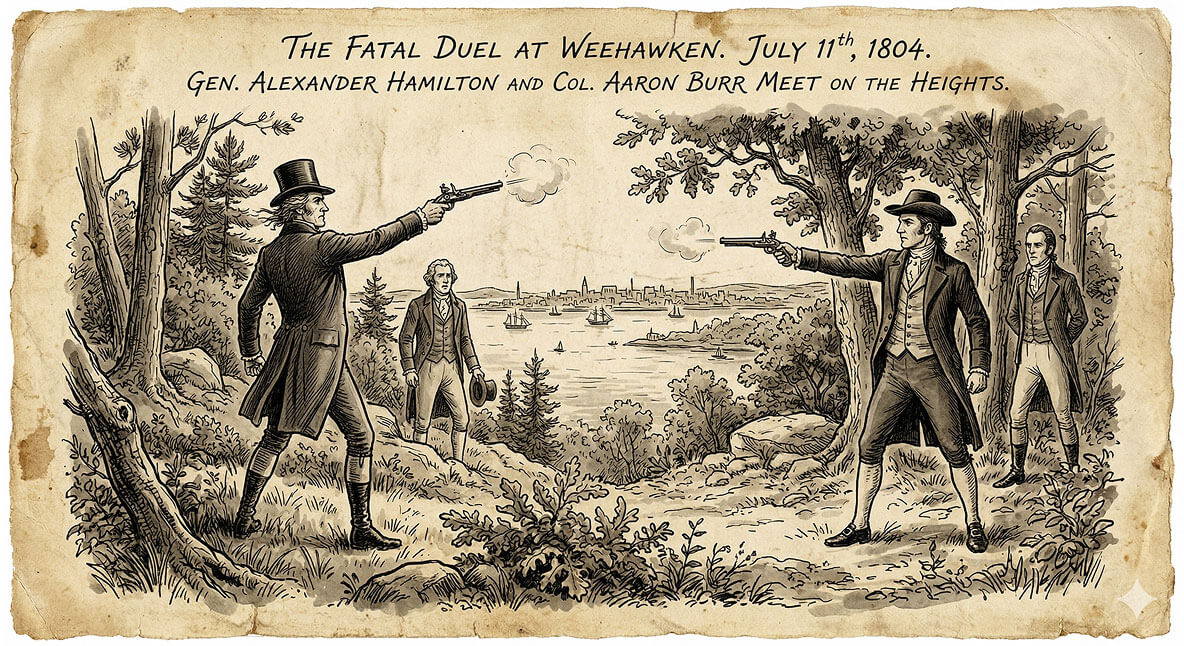
The success of the Broadway musical Hamilton in 2015 put the Weehawken Dueling Grounds on the map as a tourist destination. Just north of Hamilton Park one can see a bust of Hamilton crafted in 1935, plaques describing the history and the “death rock” where Hamilton was allegedly laid after being hit. Although it is not known if Hamilton actually laid on the rock, it is considered a legitimate artifact of the original dueling grounds. In 2019, a sculpture commemorating the duel can be visited along the waterfront by Lincoln Harbor. And for fans of the musical, let us say, no, everything is not legal in New Jersey.
Fact: There were 18 known duels in Weehawken between 1700 and 1845.
Fact: The original bust of Hamilton was destroyed in 1821 in a protest against dueling
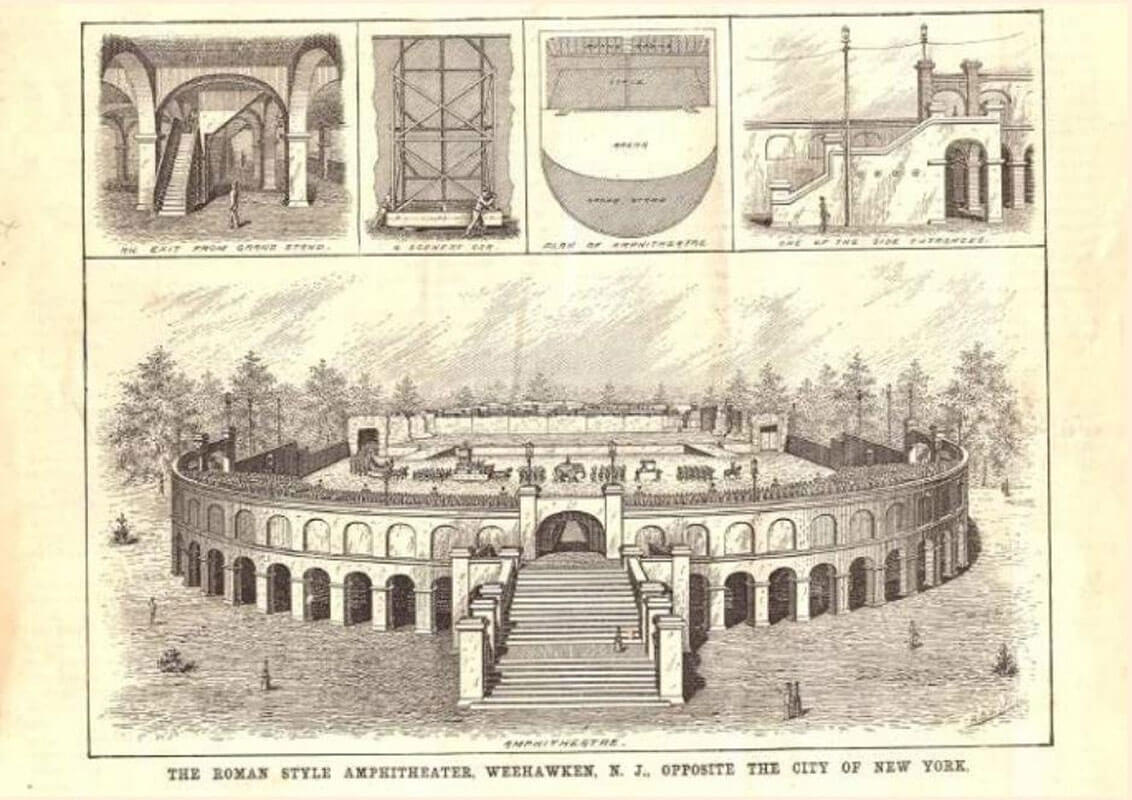
March 15, 1859 Weehawken Becomes a Town
The New Jersey legislature officially declared Weehawken a town, crafted from what was previously Hoboken and North Bergen. Some of Weehawken was also made from what was once known as West Hoboken.
Fact: Weehawken became a school district in 1862. The schoolhouse was on Baldwin Avenue south of Blvd East and the name of the first teacher was Miss Emily Wiggins
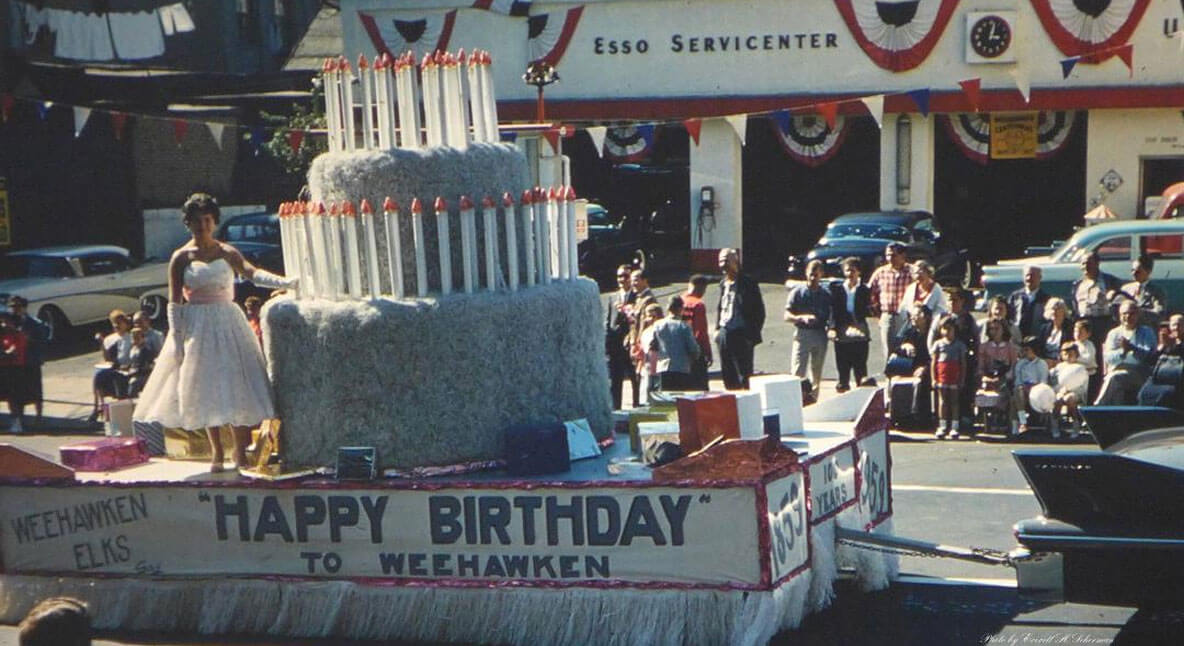
1883 Weehawken Water Tower Is Built
Once upon a time this tower, part of the Hackensack Water Company complex, held 165,000 gallons of water and was built to serve the upland communities in North Hudson, while the adjacent reservoir served Hoboken. It also had a pumping engine room, offices and living quarters for staff. Due to advances in technology, in 1904 the water tower was no longer needed and was decommissioned, although the reservoir remained until about 1980. Thanks to forward-thinking residents, in the 1980s the tower was added to the National Register of Historic places and spared demolition. The town bought the tower in 2000, and after an extensive restoration and renovation completed in 2003, plus the 2011 addition of stairs, lighting and a bathroom, the building is now the site of periodic live theatrical performances and concerts.
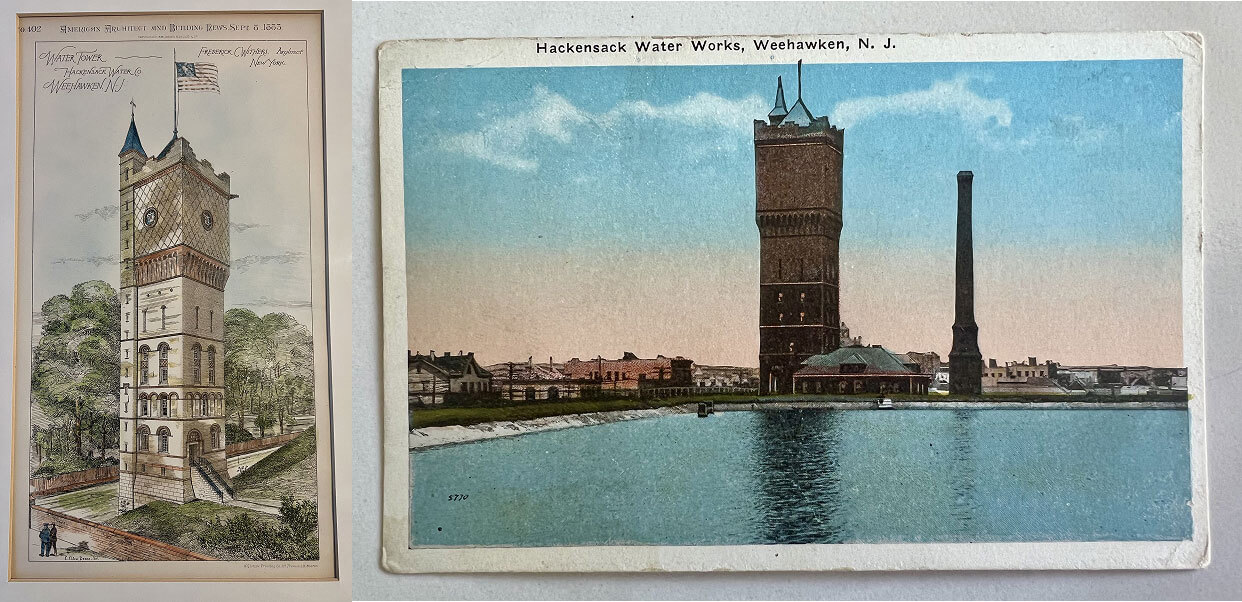
1892 Eldorado Amusement Park Opens
This was a 25-acre park atop the Palisades that boasted a castle, a casino with restaurants, bowling alleys and shooting galleries, a bandstand and music pavilion. The Roman-style amphitheater built on the site of our current Weehawken High School could hold 8,000 spectators and 1000+ performers on its stage. Programming featured circuses with animals, jugglers, aerialists, band concerts and balloonists during the day, followed by theatrical spectaculars and fireworks in the evening. In 1894, the property was sold to developers and lots for homes in Highwood Park just south of The Eldorado — what we now call the Bluff — began to be auctioned off.
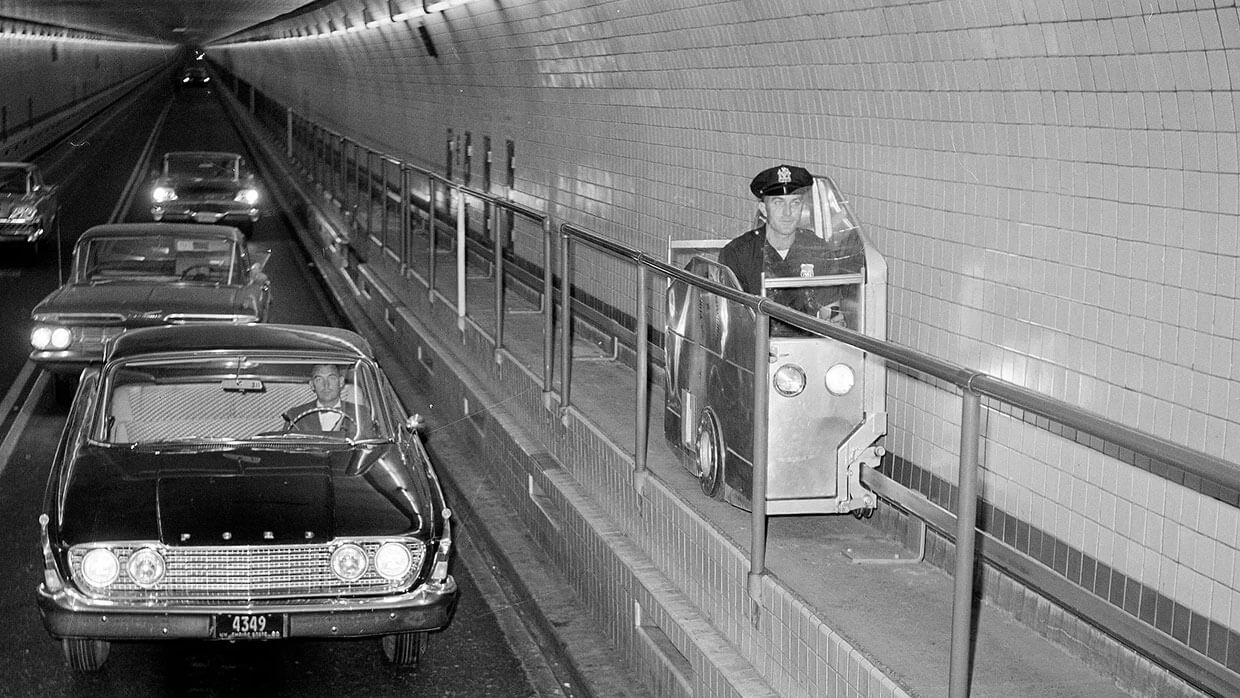
1937 Lincoln Tunnel Officially Opens
This 1.5 mile long underground passage was opened on December 22 1937, but was built beginning in 1934, to connect Weehawken and Manhattan beneath the Hudson River. The project lasted more than 20 years, as the third tube of the tunnel didn’t open until May 25, 1957.
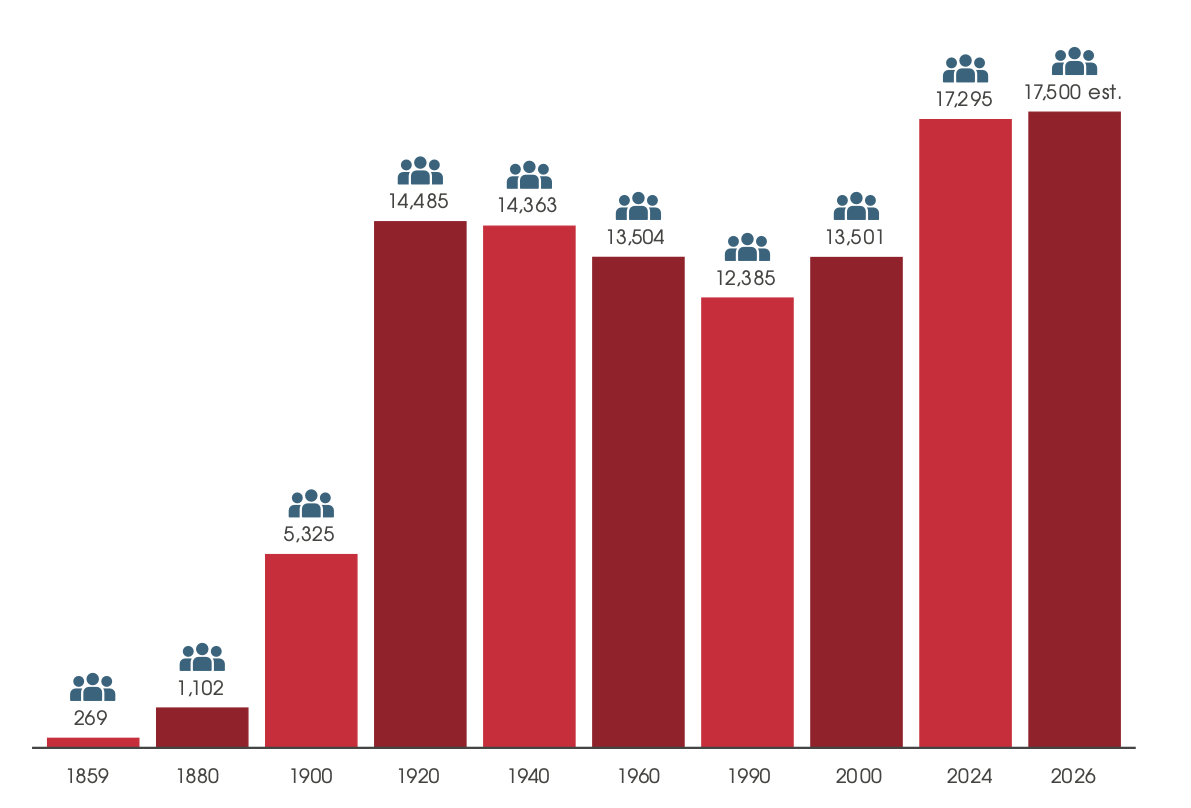
Weehawken population through the years
Famous Locals
-
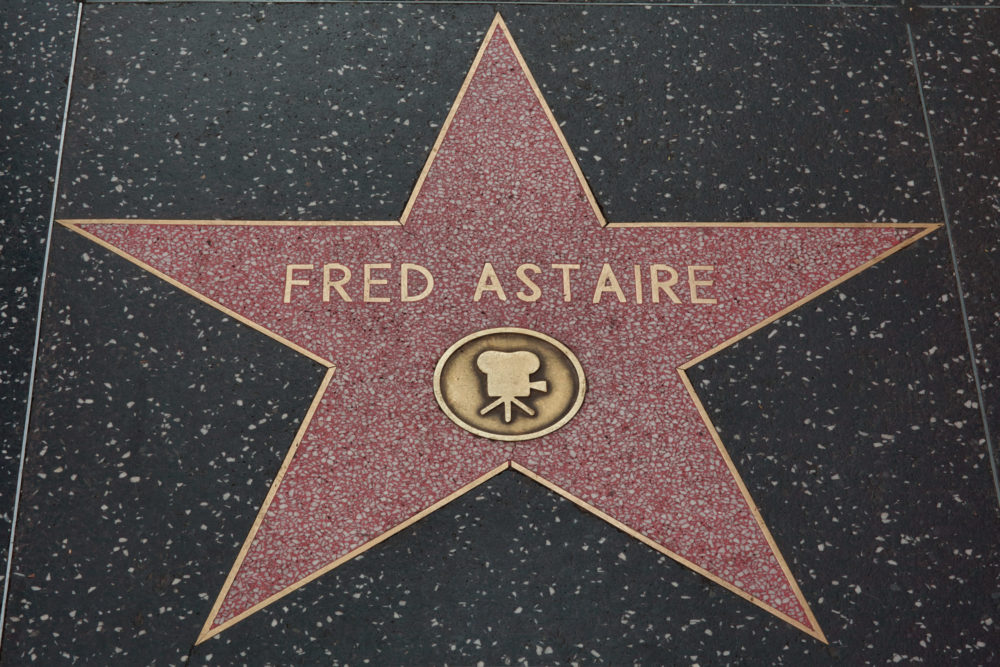
Dancer, musician, actor Fred Astaire
Dancer, musician, actor Fred Astaire
-
Choreographer Jerome Robbins
Choreographer Jerome Robbins
-
B-52’s singer Kate Pierson
B-52’s singer Kate Pierson
-
Director, producer, screenwriter James L. Brooks
Director, producer, screenwriter James L. Brooks
-
Patron of the arts Pannonica de Koenigswarter
Patron of the arts Pannonica de Koenigswarter
-
Jazz pianist Thelonius Monk
Jazz pianist Thelonius Monk
-
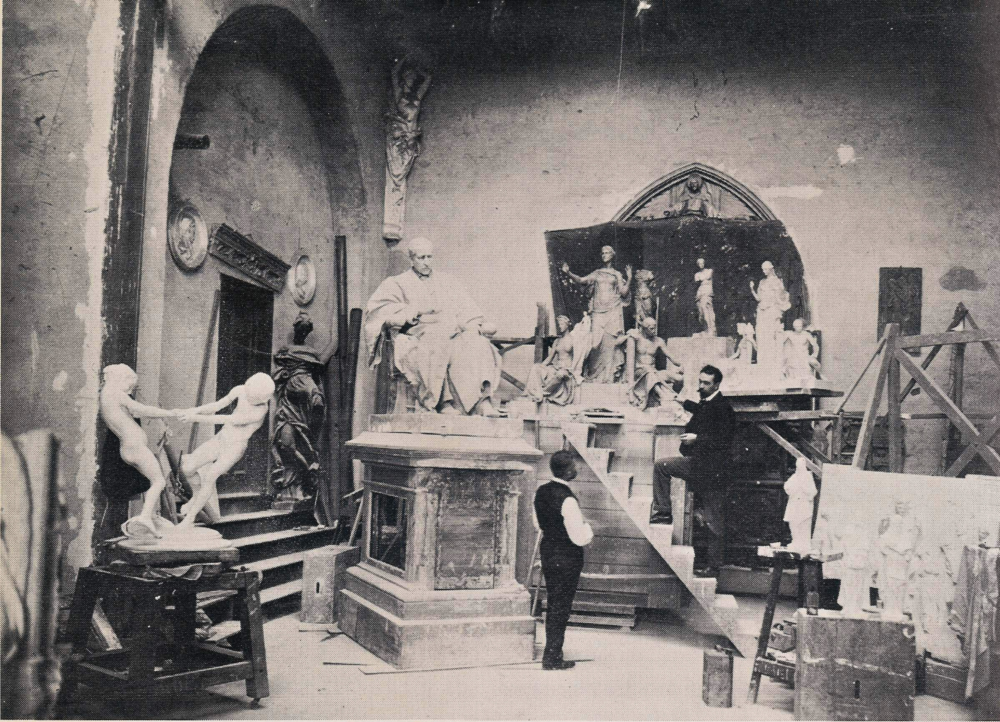
Sculptor Karl Bitter
Sculptor Karl Bitter
Weehawken 9/11 Memorial
On the Hudson River Walk waterfront, this memorial features two original steel beams recovered from the World Trade Center. The setting is significant because NY Waterway’s ferry boats helped nearly 150,000 people escape downtown Manhattan after the events of September 11, 2001. The infinity pool has a fountain and a commemorative plaque that lists the five Weehawken residents who lost their lives in the attacks.
Weehawken in the world
Dr Seuss
“Here’s a wonderful chance for the whole Once-ler Family to get mighty rich! Get over here fast! Take the road to North Nitch. Turn left at Weehawken. Sharp right at South Stitch.” — The Lorax
Dr. Seuss used Weehawken in The Lorax and Horton Hatches An Egg, probably because he loved to play with nonsense words and “Weehawken” is fun, and sounds made up if you don’t know it.
Edward Hopper
Hopper’s 1934 painting East Wind Over Weehawken depicts houses on Blvd East that still stand today. The painting sold for a record $36 million at auction in 2013.
The Honeymooners, 1956
In the episode Mambo Mama Jackie Gleason’s character debates different styles of dance including the utterly fictional, “Weehawken Mambo.”
The Muppets Take Manhattan 1984
Scooter can be seen riding his bike along Hamilton avenue during the song “Saying Goodbye.”
Thelonious Monk: Straight, No Chaser 1988
This documentary about the jazz great includes photos and videos of Monk when he lived on Kingswood road in Weehawken, in a house he called “Catville” as the baroness who owned it had up to 300 cats in residence..
ELF 2003
Buddy the Elf “passed through the seven levels of the Candy Cane forest, through the sea of swirly twirly gumdrops, and then through the Lincoln Tunnel…” which means — yup — he was in Weehawken!
The Sopranos, HBO 1999-2007
The iconic opening sequence showed the journey from NYC to the suburbs of NJ, so a few glimpses of Weehawken featured in every episode.
Central Park, Apple TV 2021
The “Weehawken Rap” was sung by Daveed Diggs of Hamilton the Musical fame and depicted many Weehawken landmarks.